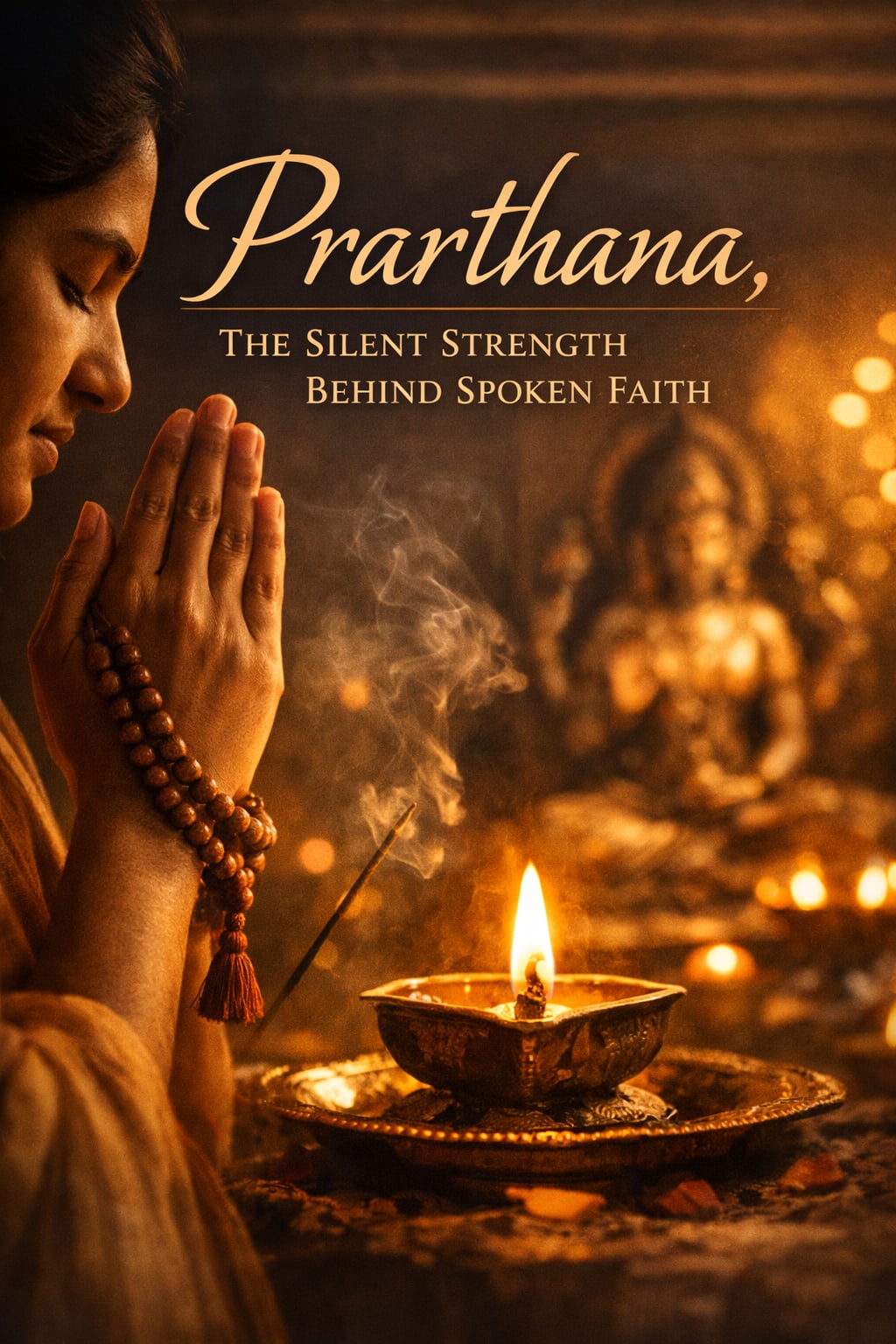
Prarthana, The Silent Strength Behind Spoken Faith
The words of faith bring sound, but the silence of faith brings strength. In the silence, the ego tempers, the heart of gratitude expands, and the spirit of courage emerges.
In the hustle and bustle of modern life, we tend to simplify prayer to a mere ritual, a quick utterance of words before a meal or a hasty visit to the altar before we head out the door. But in the ancient Vedic tradition, ‘Prarthana’—prayer—is so much more than a mere ritualistic recitation. It is a holy dialogue between the soul and the Divine. It is surrender, gratitude, and devotion all intertwined in one of the most potent acts a human being can undertake.
The very word 'Prarthana' is derived from the Sanskrit root words 'pra' (completely, fully) and 'arth' (to request, to mean). To pray, then, is to speak completely sincerely—with every fiber of your being attuned to the Divine. It is not about the correctness of your Sanskrit pronunciation or the majesty of your pooja thali. It is about the simplicity of your bhavana—your heart's intention.
Prayer as a Bridge Between You and the Divine
Our scriptures have defined the universe as a massive web of consciousness, with the Divine in every atom of the universe. When we pray with a focused and open heart, we are not reaching out to some far-off God; we are remembering our own connection to that infinite source.
The Bhagavad Gita says, "Whoever offers Me with devotion a leaf, a flower, a fruit, or water, that offering of love from a pure-hearted one, I accept." (9.26)
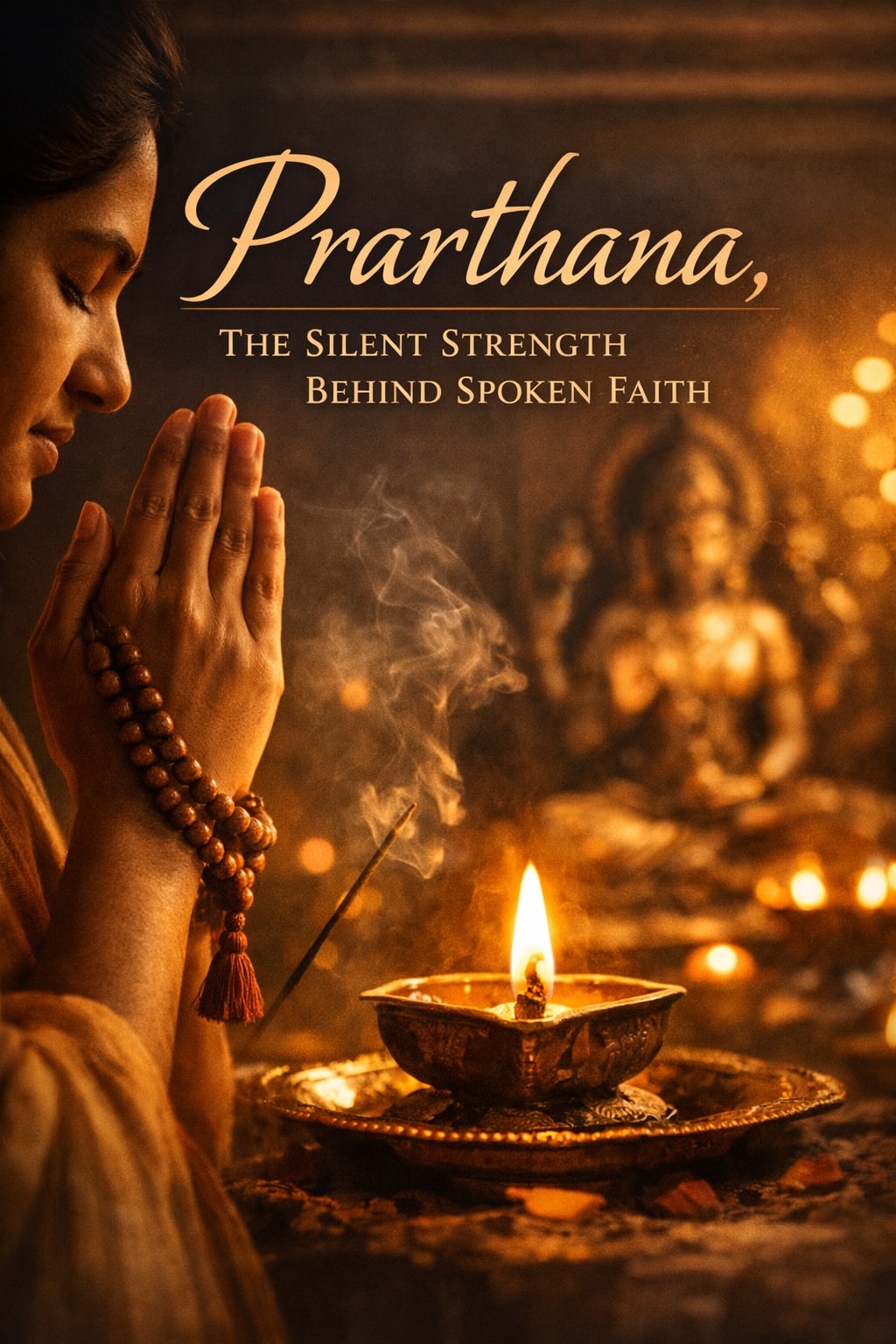
This is the beauty of the Hindu spiritual tradition. It does not ask for anything dramatic; it asks for love.
The Science of Sacred Chanting
Modern science is now discovering what our rishis knew thousands of years ago—that sound holds energy. The vibrations created during the recitation of stotras, mantras, and shlokas have a definite impact on the mind and body. They reduce the breathing rate, calm the nervous system, and focus a restless mind. Whether you are saying the Ram Raksha Stotra in the morning or the Mahamrityunjaya Mantra in times of crisis, you are tuning your internal wavelength to a higher one.
This is why our ancestors structured their day around prayer—from the Brahma Muhurta in the morning to the evening aarti as the sun set. Every moment of prayer was a return to stillness, to gratitude, and to God.
Participating in Rituals Even from Afar
One of the most strongly believed tenets of Hindu dharma is the immense spiritual power of sankalpa, or intention. This is why it is so meaningful to take part in a holy ritual, even from a distance. When a pooja is done at a temple on your behalf, your sankalpa accompanies the offering. The chanting of the priest, the holy fire, and the aroma of incense all become instruments of your worship, even if you are thousands of miles away.
In today's world, technology has given us a wonderful bridge that helps devotees all over the world stay connected to their roots, their temples, and their traditions. This is not a compromise on faith; it is faith in a new form.
Begin with One Sincere Prayer
You do not need to wait for an auspicious muhurta or a grand festival to reconnect with the Divine. Begin today. Light a lamp. Fold your hands. Speak from your heart. Let your Prarthana be simple, honest, and full of love.
Because in the end, it is not the length of your prayer that reaches the Divine; it is its depth.
Om Shanti. Shanti. Shanti.